WaveQuanta
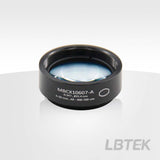
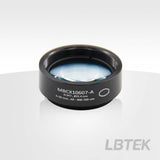
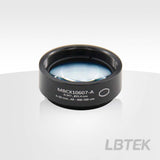
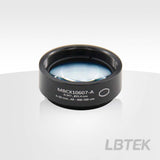
Aspheric Condenser Lens, Anti-reflection Coating: 400 nm-700 nm, Unmounted AC4807-DG1500-A
AC4807-DG1500-A
λ 400.0nm
$88.96
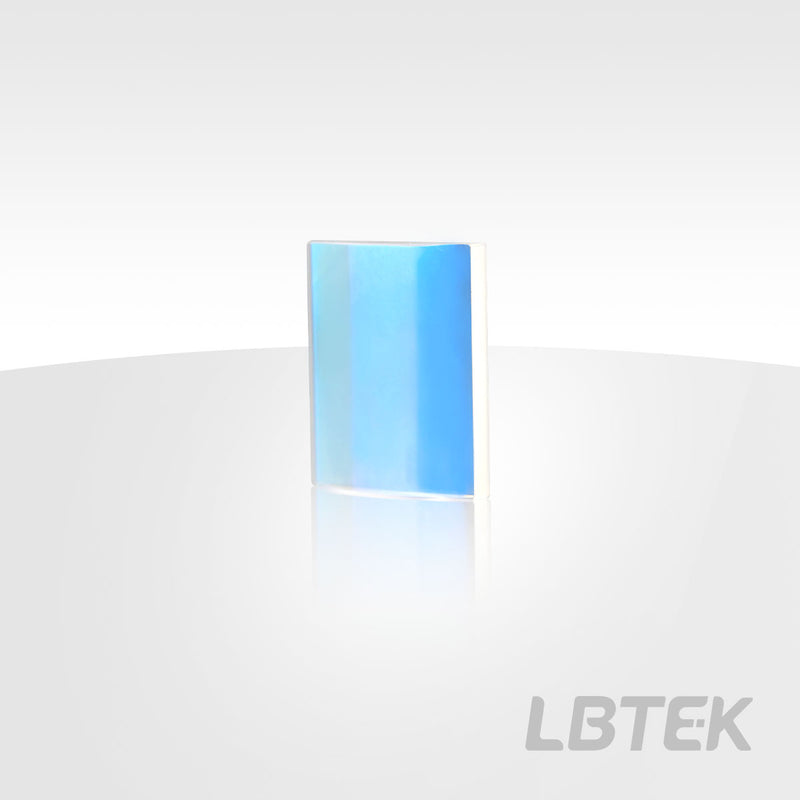
Operating wavelength 400 nm-700 nm, focal length 150.0 mm, substrate N-BK7.
The Plano-Convex Cylindrical Lens has one flat surface and one cylindrical surface, with a positive focal length. Unlike spherical lenses, cylindrical lenses only act on the beam in one direction. Cylindrical lenses are generally used for beam shaping, with typical applications including collimation and circularization of laser diode output beams using dual cylindrical lens setups. To reduce spherical aberration, when a plano-convex cylindrical lens is used to focus a collimated beam into a line, the beam should be incident on the curved surface of the lens; when collimating a line source, the beam should be incident on the flat surface of the lens. LBTEK chooses to use N-BK7 to manufacture various lenses, as N-BK7 is the most common lens material, widely used in visible and near-infrared applications. LBTEK offers Uncoated Plano-Convex Cylindrical Lenses as well as lenses with three types of anti-reflection coatings: 400 nm-700 nm, 700 nm-1100 nm, and 1100 nm-1650 nm. Our lenses are finely processed with strict quality control, ensuring that LBTEK provides High-Quality Lens Products to users at reasonable prices.
Unlike spherical lenses, cylindrical lenses act on the light beam in only one direction. LBTEK Plano-Convex Cylindrical Lenses are ideal for one-dimensional magnification applications. Typical applications include collimation and circularization of laser diode output beams using dual cylindrical lens assemblies. To minimize spherical aberration, when plano-convex cylindrical lenses are used to focus a collimated beam into a line, the beam should be incident on the curved surface of the lens; when collimating a linear light source, the beam should be incident on the planar surface of the lens.
| Material | N-BK7 |
| Size | H x L= 30.0 mm x 32.0 mm |
| Dimensional tolerance | +0.0/-0.1 mm |
| Clear Aperture | 90% |
| Center Thickness | 4.5 mm |
| Center Thickness Tolerance | ±0.2 mm |
| Edge Thickness | 3.0 mm |
| Effective Focal Length | 77.5 mm |
| Design Wavelength | 587.6 nm |
| Operating Wavelength | 400 nm-700 nm |
| Focal length | 150.0 mm |
| Focal length tolerance | ±1% |
| Back Focal Length | 147.1 mm |
| Coating | Anti-Reflection (AR) Coating |
| AR Coating Reflectance | Ravg<0.5%a@Operating Wavelength(6°AOI,single-side) |
| Surface Quality (Scratch/Dig) | 60/40 |
| Local Aperture Irregularity along Length | 0.5 |
| Curved Aperture | 3 |
| Local Aperture Irregularity along Height | 0.5 |
| Eccentricity | ≤5 arcmin |
| Damage Threshold | 0.19J/cm2@515nm,290fs,100Hz,Ø10.72μm (100 Pulses) |