WaveQuanta
Intense THz Spectroscopy System, Turnkey, > 10 MV/cm Peak Field
WQ-ITHZ-TK1Contact for pricing
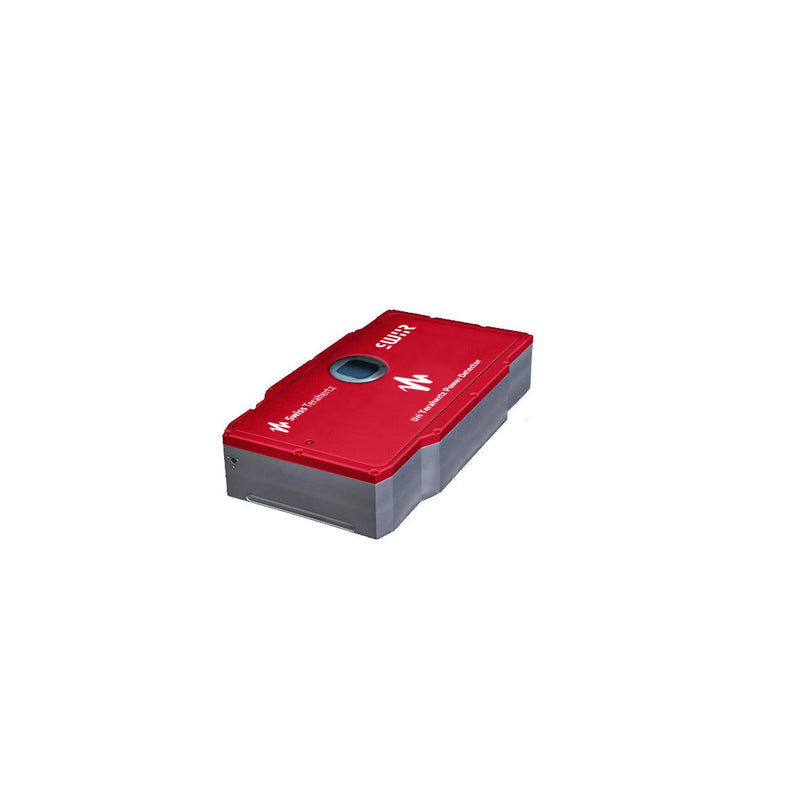
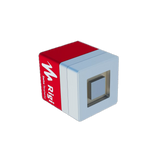
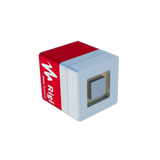
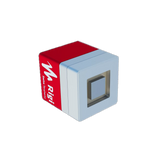
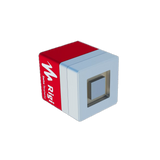
The Uri sensor is a room-temperature pyroelectric power head for the terahertz band, with a noise equivalent power below 1 nW per root hertz. It measures total incident power rather than the field waveform, which makes it the practical instrument for the routine questions that come up every day on a terahertz beamline: is the source running at its usual level, did the last realignment help, how much power is the sample absorbing.
Electro-optic sampling gives the full field waveform with amplitude and phase, but it requires a probe beam, a delay line, a balanced detector and a lock-in, and it takes a scan to produce one measurement. A pyroelectric head gives a single number immediately and needs none of that. Most working terahertz labs use both: the power head for setup and monitoring, electro-optic sampling for the actual spectroscopy.
The analog output on SMA or BNC connects directly to an oscilloscope for a quick look, or to a lock-in amplifier referenced to an optical chopper when the signal is small. Chopping and lock-in detection are worth the extra hardware whenever the terahertz power approaches the noise floor, since they move the measurement away from low-frequency drift. A digital ADC output can be supplied if the sensor needs to feed a data acquisition chain directly.
Pyroelectric detectors respond to changes in incident power rather than to a steady level, so a modulated or pulsed source is required; a continuous unmodulated beam will not give a stable reading. Keep the sensor face clean and avoid air currents across it, since the element also responds to thermal disturbance. Because the response is broadband, block residual near-infrared pump light before the sensor or the reading will include it.
| Model | Uri |
| Detector type | Pyroelectric THz power sensor |
| Noise equivalent power | < 1 nW/sqrt(Hz) |
| Operating temperature | Room temperature, no cooling required |
| Measurement | Total incident THz power, non-coherent |
| Analog output | SMA or BNC, to an oscilloscope or lock-in amplifier |
| Digital output | ADC available on request |
| Spectral response | Broadband across the THz range |
| Typical use | Source calibration, alignment, day-to-day power checks |
| Availability | Contact for configuration and lead time |